Responding to Climate Change
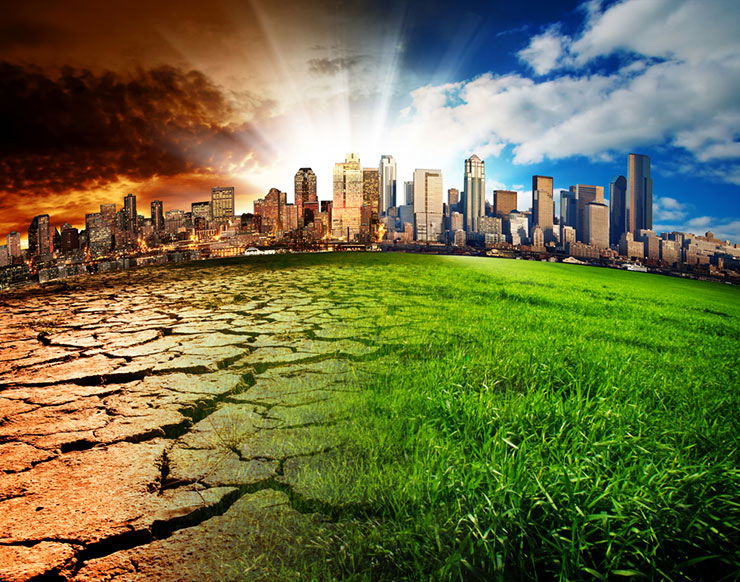
What is Climate Change?
Climate change is a long-term change in the average weather patterns that have come to define Earth’s local, regional and global climates. These changes have a broad range of observed effects that are synonymous with the term.
Changes observed in Earth’s climate since the early 20th century are primarily driven by human activities, particularly fossil fuel burning, which increases heat-trapping greenhouse gas levels in Earth’s atmosphere, raising Earth’s average surface temperature. These human-produced temperature increases are commonly referred to as global warming.
Scientists use observations from the ground, air and space, along with theoretical models, to monitor and study past, present and future climate change. Climate data records provide evidence of climate change key indicators, such as global land and ocean temperature increases; rising sea levels; ice loss at Earth’s poles and in mountain glaciers; frequency and severity changes in extreme weather such as hurricanes, heatwaves, wildfires, droughts, floods and precipitation; and cloud and vegetation cover changes, to name but a few.
Because we are already committed to some level of climate change, responding to climate change involves a two-pronged approach:
- Reducing emissions of and stabilizing the levels of heat-trapping greenhouse gases in the atmosphere (“mitigation”);
- Adapting to the climate change already in the pipeline (“adaptation”).
Mitigation and Adaptation
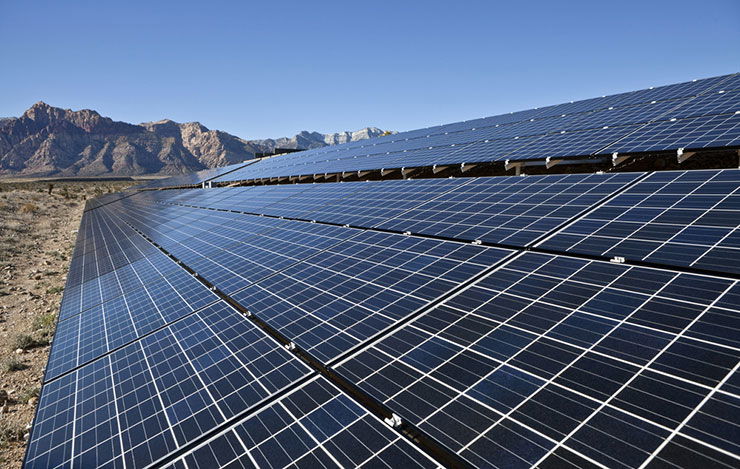
Mitigation: -
reducing climate change – involves reducing the flow of heat-trapping greenhouse gases into the atmosphere, either by reducing sources of these gases (for example, the burning of fossil fuels for electricity, heat or transport) or enhancing the “sinks” that accumulate and store these gases (such as the oceans, forests and soil). The goal of mitigation is to avoid significant human interference with the climate system, and “stabilize greenhouse gas levels in a timeframe sufficient to allow ecosystems to adapt naturally to climate change” (from the 2014 report on Mitigation of Climate Change from the United Nations Intergovernmental Panel on Climate Change, page 4).
Adaptation : -
adapting to life in a changing climate – involves adjusting to actual or expected future climate. The goal is to reduce our vulnerability to the harmful effects of climate change (like sea-level encroachment, more intense extreme weather events or food insecurity).
While climate change is a global issue, it is felt on a local scale. Cities and municipalities are therefore at the frontline of adaptation. Cities and local communities around the world have been focusing on solving their own climate problems. They are working to build flood defenses, plan for heatwaves and higher temperatures, install water-permeable pavements to better deal with floods and stormwater and improve water storage and use.
Climate change is starting to be factored into a variety of development plans: how to manage the increasingly extreme disasters we are seeing and their associated risks, how to protect coastlines and deal with sea-level encroachment, how to best manage land and forests, how to deal with and plan for reduced water availability, how to develop resilient crop varieties and how to protect energy and public infrastructure.
A group of American scientists considered that trees are one of the best means to achieve this end, but it will require planting thousands of millions of them. But do not despair, get up and move to plant only one tree, and be certain that it will make a difference. Do not forget to invite your friends to do the same as you and save the planet.
https://kuroshio.eorc.jaxa.jp/JASMES/climate/index.html